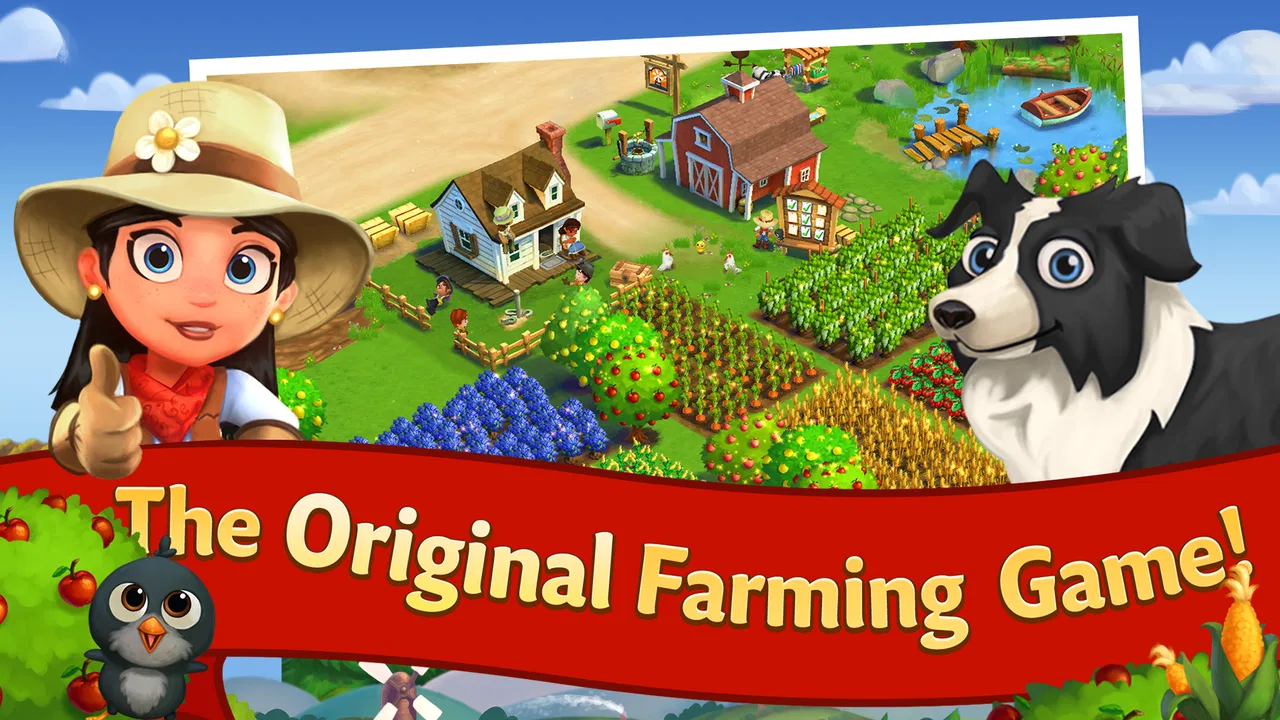
FarmVille 2: Country Escape
- 4.6
- Rating
- 50.00M
- Installs
- Free
- Price

 Analysis by App-foxy
I went into FarmVille 2: Country Escape expecting a familiar farming game, but its appeal became clearer after a few short sessions. The main attraction is not simply planting crops or collecting animals. It is the steady rhythm of making a small decision, watching that decision produce something useful, and then finding a new reason to return. That makes it a comfortable casual game for spare moments rather than a demanding strategy experience.
Developed by Zynga, this free game puts the focus on building a personal farm, growing resources, caring for animals, and gradually making the countryside feel more productive. It is rated for Everyone, which fits its colorful presentation and gentle tone. The audience is broad, but the best match is someone who enjoys progress that arrives in small pieces and does not mind waiting for activities to finish.
The game has been available since Apr 16, 2014, and its long presence is reflected in its large community: it has passed 50 million installs, with an average rating of 4.5 from around 3.2 million ratings. Those figures do not guarantee that every player will enjoy it, but they do show how well this particular farming loop has connected with mobile players.
You May Also Like

 Blood Strike: 2.5 Anniversary
Blood Strike’s Loadouts Turn Every Drop Into a Tactical Gamble
A close look at Blood Strike’s custom loadouts: how fast access to signature weapons reshapes its battle royale rhythm, rewards preparation, and narrows the gap between fights.

 Pandora - Music & Podcasts
Pandora’s Music Is Easy to Start, but Harder to Recover
Pandora’s strength is its low-effort path from a seed to a station. Its weak spot is how much confidence it asks you to place in connection, setup, and quiet recovery.

 8 Ball Pool
 Is Built on Rivalries, Rematches, and Routine
A close look at the rivalries, rematches, shared routines, and unanswered safety questions that turn a quick pool match into a persistent mobile community.

 Samsung Music
’s Quiet Strength Is Playing What You Already Own
Its reach comes less from spectacle than from dependable access to a personal library. That simplicity is both the app’s strongest retention engine and its ceiling.

 AccuWeather: Weather Radar
AccuWeather Review: A Quick, Clear Forecast for Everyday Decisions
For everyday plans, the best forecast is the one you can understand quickly. AccuWeather makes rain timing, radar, and local conditions easy to act on, with a few trade-offs.

 Hill Climb Racing
Why Hill Climb Racing Still Turns Crashes Into One More Run
A tiny car, a bumpy hill and one more upgrade: Hill Climb Racing keeps resurfacing because its simple chaos makes every near-miss feel personal.
More From Our News Desk
View All News


How the farm loop feels from the first action to the next session
I find the farm loop easiest to enjoy when I treat each visit as a small planning window: collect what is ready, choose one useful next task, and leave the rest for later. That approach keeps the steady routine from turning into aimless tapping and gives the next session a clear purpose. The same rhythm also makes it easier to judge whether this kind of gradual progress fits the way you like to play.
Starting with a simple action
The first useful thing to understand is that the game is built around a chain of modest actions. I choose something to produce, assign the available farm space or animal activity, and then wait for the result. Once the item is ready, I collect it and use it as part of the next task. The individual actions are easy, but they become satisfying because each one feeds into another.
That structure makes the opening minutes approachable. I do not need to learn a complicated control scheme or memorize a large set of rules before making progress. The visual presentation points me toward the next practical job, while the farm gradually becomes more active as I add new tasks. For a casual title, this is a strong beginning because it gives immediate purpose without making the player feel rushed.
The best way to play is to think one or two steps ahead rather than tapping every available option immediately. If I collect everything without considering what I will need next, I can end up with a busy farm but an awkward shortage of the item required for the next order. Planning around the current request keeps the loop moving and makes the farm feel more like a small production puzzle than a simple tapping exercise.
One useful habit is to check the available goals before committing limited resources. The game becomes less frustrating when I treat each action as part of a queue. A crop, animal product, or crafted item is more valuable when it helps complete a clear objective than when it is produced randomly just because the option is available.
The feedback rhythm keeps small tasks meaningful
FarmVille 2: Country Escape gives frequent feedback through completed activities, collected goods, and visible progress. The rhythm is easy to recognize: start an activity, leave the farm, return later, collect the result, and use it to unlock the next step in the chain. That repeated pattern is the central reason another session begins.
I found this rhythm particularly suitable for short breaks. A quick visit can be enough to collect finished work and begin a new batch. A longer visit gives me time to organize the farm, examine what is needed next, and decide which production task deserves priority. The same game therefore works differently depending on how much attention I have available.
The feedback is most enjoyable when I return after a sensible pause and find that several small decisions have paid off. It creates a pleasant sense of continuity: the farm has not stopped being useful just because I put the phone down. At the same time, the waiting structure means this is not a game I would recommend to someone who wants constant action or immediate completion.
That distinction matters. The game is casual in the real sense of the word. It rewards regular check-ins more than long, intense sessions. Players who prefer fast rounds, direct competition, or a clear finish line may find the pace too soft. In contrast, anyone who likes gradually improving a space can appreciate how little visits accumulate into a more developed farm.
Rewards are most satisfying when they solve a problem
The reward system works best when I use it to remove a practical obstacle. Completing an order, collecting a finished product, or improving the farm feels meaningful because it gives me another option rather than merely adding a decorative number. The reward opens a new decision: should I invest it in production, keep it for a future request, or use it to make the next visit smoother?
This is where the game has more depth than its cheerful appearance suggests. The important question is rarely “What can I tap now?” It is “Which result will make the next few actions easier?” That small change in thinking helps prevent waste and gives the player a reason to pay attention to the order of tasks.
I also like that the farm’s progress feels personal. Even when the underlying activities are familiar, arranging the space and deciding what to prioritize gives the experience a more relaxed, individual character. I am not simply moving through a fixed list of levels. I am maintaining a place that gradually becomes busier and more rewarding to revisit.
There is a trade-off, though. Progress can feel slower when I need a particular item and the required chain of production takes several steps. That delay is part of the design, but it can test patience. The game is more enjoyable when I accept that not every request should be completed immediately. Trying to force every objective at once makes the farm feel restrictive; choosing a manageable target keeps the reward cycle pleasant.
Why the reset works after closing the game
The session reset is simple: I finish what I can, start a few useful activities, close the game, and return when there is a reason to check the farm again. The reset is not a failure state. It is the natural pause between one round of decisions and the next. That makes the game fit neatly into a daily routine without demanding that I stay present for a long stretch.
A realistic example is a short morning visit. I can collect anything that has finished, look at the next order, begin the longest sensible activity, and leave. Later, perhaps during a lunch break, I return to collect the results and begin a shorter chain. In the evening, I can make a more deliberate pass through the farm. The game feels most comfortable when used this way, as a sequence of small check-ins rather than one uninterrupted sitting.
The reset also encourages a useful preparation habit. Before leaving, I try not to empty every available resource or begin a task without checking what it supports. Setting up the next visit is almost as important as completing the current one. This is one of the less obvious strengths of the design: the final few taps of a session can determine whether the next visit feels productive or aimless.
However, the same structure can become repetitive. The actions are familiar, and the basic cycle does not suddenly transform into a completely different genre. If I play for too long in one sitting, the charm of collecting and producing can fade into routine. The game is better at creating a dependable habit than at delivering dramatic surprises every few minutes.
Where it stands beside other casual farming games
Compared with a traditional free-form farming simulator, this game places more emphasis on short production chains and regular returns. It is less about spending a long session carefully managing every square of land and more about keeping a set of activities moving between visits. That makes it easier to fit into a busy day, although players seeking deep agricultural simulation may find the decisions relatively light.
Compared with fast puzzle games, it offers a slower and more persistent form of satisfaction. There is no need to restart after a failed attempt, and the farm continues to provide context for each new task. The trade-off is that the payoff is delayed. A puzzle can deliver a result in seconds; here, the pleasure often comes from returning later and seeing what the earlier choice produced.
It also differs from competitive casual games because the main pressure comes from resource management and patience rather than direct rivalry. That makes it a better choice for someone who wants a calm personal project. If your favorite mobile games depend on leaderboards, rapid reactions, or constant challenge, this countryside setting may feel too quiet.
Things to know before committing time
The game is free to download, but it includes in-app purchases ranging from $0.49 to $374.99 per item. That is important because the waiting and resource limits are part of the experience, and optional spending can change how quickly progress feels. I would approach it with a clear personal rule: enjoy the ordinary cycle first, and do not treat a purchase as the solution to every delay.
The purchase range also means this is not the best recommendation for someone who wants a completely frictionless free game. Players who dislike timers, resource decisions, or any temptation to accelerate progress should be cautious. The game can be played casually without spending, but patience is a genuine part of that choice.
Device compatibility is reasonably broad for a modern mobile title. The current version is 29.4.108, and it requires Android 6.0 or later. On a compatible phone, I would still reserve enough storage and keep the game updated, because a long-running title can change over time as its version develops. The important practical point is to check that the device meets the minimum operating-system requirement before expecting a smooth installation.
The Everyone rating makes it suitable for a wide audience, but suitability also depends on play style. Younger players may enjoy the animals, colors, and straightforward tasks, while adults may appreciate the calming routine. For children, I would still keep in-app purchases in mind, particularly if the device is shared or payment settings are not protected.
Who will enjoy it, and who should skip it
I would recommend it to players who enjoy gentle progress, organized routines, and the satisfaction of returning to a project that has continued developing. It is especially good for people who want a game that can be checked in short bursts without requiring perfect concentration. The farm gives those small visits a clear purpose while remaining easy to understand.
It is also a good fit for someone who likes light planning. The most rewarding moments come from choosing the right production order, preserving useful resources, and preparing the next visit. Those decisions are not difficult, but they prevent the experience from becoming completely automatic.
I would skip it if you want a complete game in one sitting, a strong narrative campaign, or constant novelty. I would also look elsewhere if waiting mechanics and optional acceleration purchases bother you. A traditional offline farming simulation may be a better choice for someone who wants uninterrupted control, while a puzzle game may suit someone who wants immediate outcomes and clear short rounds.
My verdict on the complete action-feedback-reward-reset loop
What keeps me returning is the clean relationship between action and consequence. I begin a task, receive a visible result, turn that result into progress, and then set up the farm for the next visit. The loop is not flashy, but it is coherent. Each session ends by creating a small reason to start another one.
The strongest tip I can offer is to treat every visit as preparation as well as collection. Do not only take what is ready; decide what your future self will need. A second useful tip is to prioritize one clear chain instead of trying to satisfy every request simultaneously. Finally, accept the reset. Closing the game at the right moment is part of playing well, not a sign that there is nothing left to do.
After spending time with it, I see FarmVille 2: Country Escape as a polished casual farming game for patient players. Its 4.5 average and broad install base make sense because the core routine is approachable, flexible, and easy to revisit. Zynga has built something that works best in the gaps of a normal day, where a few collected goods and a newly prepared task are enough to make the next check-in feel worthwhile.
My honest recommendation is to try it if you want a calm, ongoing farm rather than a fast arcade challenge. Keep the purchase system in perspective, plan before spending resources, and use the reset to your advantage. If that relaxed action-feedback-reward cycle sounds appealing, the game has enough structure to become a pleasant everyday companion. If you need immediate action and constant change, its patient countryside pace will probably feel more like a limitation than a benefit.
FAQs for FarmVille 2: Country Escape
01What is FarmVille 2: Country Escape and how does it differ from the original FarmVille?
FarmVille 2: Country Escape is a mobile farming game where you can build, manage, and expand your virtual farm. Unlike the original FarmVille, this version is designed specifically for mobile devices and offers offline play, allowing you to continue farming without an internet connection. The graphics are more polished, and it introduces new features like crafting and trading.
02Can I play FarmVille 2: Country Escape offline?
Yes, one of the key features of FarmVille 2: Country Escape is its offline mode. You can enjoy farming activities such as harvesting crops and raising animals without an internet connection. However, certain features like visiting co-op farms or trading with friends will require you to be online.
03Are there in-app purchases in FarmVille 2: Country Escape?
FarmVille 2: Country Escape offers in-app purchases that allow players to buy keys and coins, which can be used to speed up farming processes, purchase special items, or expand the farm. While these purchases can enhance gameplay, they are not necessary to progress, as the game can be played and enjoyed without spending real money.
04How do I connect with friends in FarmVille 2: Country Escape?
To connect with friends in FarmVille 2: Country Escape, you can link the game to your Facebook account. This will allow you to visit your friends' farms, trade goods, and join co-ops. Additionally, the game supports anonymous connections, so you can play with others without needing to share personal information.
05What are the main activities I can do in FarmVille 2: Country Escape?
In FarmVille 2: Country Escape, players can engage in various farming activities such as planting and harvesting crops, raising animals, and crafting goods. You can also explore new areas, complete quests, and participate in events. The game encourages creativity and strategy in managing your farm and interacting with other players.
Pros
- Engaging gameplay with diverse tasks.
- Beautifully designed graphics and animations.
- Regular updates with new events and features.
- Offline mode available for continuous play.
- Free-to-play with optional in-app purchases.
Cons
- In-app purchases can become costly.
- Requires consistent internet for some features.
- Progress can be slow without purchases.
- Occasional bugs and crashes reported.
- Limited social interaction compared to other titles.

FarmVille 2: Country Escape
Gallery